

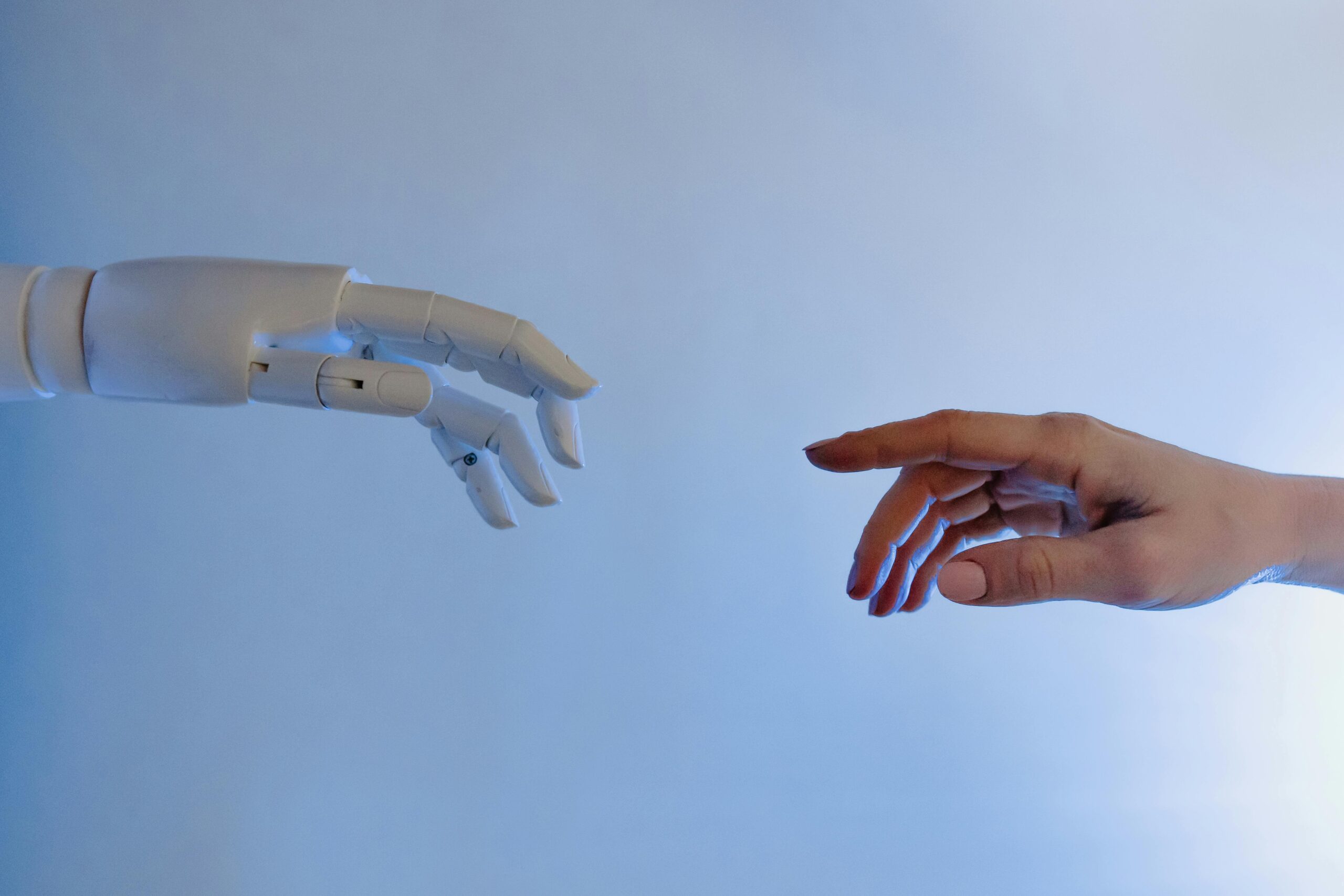
The digital marketing landscape has reached a historic inflection point. As of 2026, we are no longer “experimenting” with algorithms; we are living in the era of the AI-native enterprise. According to recent industry data, 61% of marketers believe the industry is currently undergoing its most significant disruption in over 20 years, driven primarily by the maturation of artificial intelligence.
What was once a futuristic concept has become the baseline for survival. Today, 80% of marketing teams leverage AI for content creation, while 75% use it for complex media production. For businesses looking to compete, understanding AI in digital marketing is no longer optional—it is the fundamental operating system for growth.
What AI in Digital Marketing Means in 2026

In 2026, artificial intelligence marketing refers to the use of machine learning, natural language processing (NLP), and autonomous agents to automate and optimize every stage of the customer journey. We have moved past simple automation—where a tool followed a “if this, then that” rule—into a world of predictive orchestration.
Modern AI in digital marketing functions as an “intelligent discovery system.” Instead of waiting for a user to type a specific keyword into a search bar, AI analyzes trillions of data points—including browsing behavior, emotional cues, and device usage—to identify intent before the consumer even articulates a need. This shift from reactive to proactive marketing is the defining characteristic of the current era.
From Segmentation to Individualization
For decades, marketers grouped people into “segments” based on age or location. In 2026, machine learning in marketing has made segmentation feel primitive. We now practice “individualization,” where AI designs a unique customer journey for every single person in real-time. Two people visiting the same website at the same time will now see entirely different landing pages, pricing nudges, and product recommendations tailored specifically to their current psychological state and past behaviors.
The Strategic Benefits of AI for Marketing
The adoption of AI marketing strategies has delivered measurable, compounding returns for organizations that have moved beyond the “experimentation” phase.
1. Massive Gains in Operational Efficiency
One of the most immediate benefits is the radical compression of workflows. Over 52% of marketing leaders report significantly improved operational efficiency since integrating agentic AI—autonomous systems that can plan and execute tasks with minimal human intervention. Tasks that previously took weeks, such as multivariate ad testing or cross-channel content repurposing, are now completed in minutes, allowing human teams to focus on high-level strategy and brand vision.
2. Enhanced Lead Quality and Conversion Rates
By utilizing machine learning in marketing for lead scoring, businesses can now predict which prospects have the highest “propensity to purchase” based on subtle behavioral patterns. Organizations implementing AI-driven personalization across the consideration stage of the funnel have seen average conversion rate improvements of 15% to 25%.
3. Predictive Foresight
Instead of looking at “what happened” in a monthly report, 2026 marketers use “Decision Intelligence.” AI models now simulate business scenarios and predict outcomes before a single dollar is spent. This allows leaders to forecast demand, predict customer churn with high accuracy, and adjust budgets dynamically to ensure the highest possible Return on Investment (ROI).
Top AI Marketing Tools Used in 2026
The “MarTech” stack of 2026 is dominated by platforms that embed AI into their core DNA. Here are the leading AI marketing tools categorized by their primary function:
| Category | Leading Tools | Primary Use Case |
| SEO & AEO | AIclicks, Perplexity, Surfer SEO | Optimizing for AI answer boxes and “Answer Engine Optimization” (AEO). |
| Content Creation | Jasper, ChatGPT-4o, Claude | Generating brand-consistent copy, long-form articles, and social media carousels. |
| Programmatic Ads | Albert AI, Cometly, Adzooma | Autonomous bidding, real-time ad optimization, and server-side tracking. |
| Customer Data | Salesforce 360, Adobe Experience Platform | Unifying B2B/B2C data into a single “source of truth” for hyper-personalized journeys. |
| Video Production | Synthesia, HeyGen, Lumen5 | Creating multilingual product demos and personalized video messages using AI avatars. |
Spotlight: The Rise of AEO Tools
A critical shift in 2026 is the move from traditional SEO to “Answer Engine Optimization” (AEO). Tools like AIclicks are now essential because they track “AI visibility”—measuring how often your brand is cited as a primary source by ChatGPT, Gemini, and Perplexity. In a world where “zero-click” searches are becoming the norm, being the source cited in an AI overview is the new gold standard for organic reach.
Real Examples of Companies Using AI in Marketing
Examining the future of digital marketing in action reveals how global brands are moving the needle.
- HubSpot: By evolving its “Educational Hub” into an AI-powered academy, HubSpot uses generative AI to customize learning paths for millions of users, effectively turning readers into highly qualified CRM buyers through personalized “solve, don’t sell” content.
- IKEA: The IKEA Kreativ AI tool allows customers to scan their living rooms and use spatial AI to “delete” existing furniture and swap in IKEA products. This bridge between the physical and digital worlds has redefined the “try-before-you-buy” experience.
- Spotify: Their “Wrapped” campaign remains a benchmark for data-driven storytelling. By turning individual listening data into viral, social-sharable narratives, Spotify demonstrates how AI-driven personalization creates deep emotional brand loyalty.
- Netflix & Amazon: These giants continue to set the standard for recommendation engines. By using machine learning to analyze not just what you buy, but how long you hover over a thumbnail, they generate 1-to-1 suggestions that drive over 75% of their total engagement.
The Challenges of AI in Marketing
Despite the overwhelming benefits, the rapid integration of AI in digital marketing has created significant friction points that businesses must navigate.
The “AI Slop” Crisis
As AI makes content production “cheap” and “easy,” the market has been flooded with “AI slop”—low-quality, generic content that offers no real value. Consumers are beginning to tune out automated-sounding brand messaging. The challenge for 2026 marketers is to move toward “Artisanal AI”—using technology to enhance, not replace, human creativity, empathy, and original perspective.
Regulatory Compliance and the EU AI Act
Privacy is the primary concern for 2026. The EU AI Act, with major provisions becoming applicable by August 2, 2026, has introduced a risk-based framework that bans certain AI practices (like emotional manipulation) and strictly regulates “High Risk” systems. Marketers operating in or targeting users in the EU must now ensure their AI systems are transparent, traceable, and human-monitored, or face penalties of up to €35 million or 7% of global turnover.
Brand Safety and Hallucinations
In programmatic advertising, the spread of AI-generated “made-for-advertising” (MFA) sites has created new risks. AI-generated site farms can deliver high impression counts that look legitimate but don’t translate to brand recall. Furthermore, “hallucinations”—where AI generates factual errors—remain a threat to brand credibility, necessitating a “human-in-the-loop” governance model.
Future Trends: What’s Next Beyond 2026?
As we look toward the later part of this decade, the future of digital marketing will be defined by three emerging shifts:
1. The Proliferation of Agentic AI
We are moving from “AI assistants” to “Autonomous AI Agents.” These systems will not just write an email; they will autonomously research a prospect, plan a 30-day multi-channel campaign, adjust budgets based on real-time performance, and “negotiate” with other agents to place ads. By 2030, the most successful marketers will be “System Designers” who orchestrate these agents rather than executing individual campaigns.
2. Ambient Intelligence
With the rise of AI-enabled wearables and sensors, brand engagement is shifting from “explicit searches” to “ambient interactions”. Your brand won’t just appear when someone types a query; it will appear as a helpful suggestion via a voice assistant or smart glasses based on the user’s current physical context and immediate need.
3. The “Credibility Economy”
As AI-generated media becomes indistinguishable from reality, “Authenticity” will become the most valuable commodity. We expect a massive return to human-led, unpolished content—what experts call “Radical Self-Awareness”. Brands that lean into their imperfections, founder stories, and employee faces will win the trust that automated systems cannot replicate.
Conclusion: Balancing Innovation and Humanity
In 2026, the question is no longer whether you are using AI in digital marketing, but how well you are balancing its efficiency with human-centered trust. AI provides the scale, the speed, and the predictive precision, but human marketers must provide the vision, the ethics, and the emotional resonance.
Success in this new era requires a disciplined “AI governance” framework—regularly auditing your tools for bias, ensuring data transparency, and pruning “slop” in favor of high-utility, artisanal content. For those who master this hybrid approach, artificial intelligence is not a threat; it is the most powerful growth engine ever created